Article
Unlisted SharesPharmEasy Unlisted Shares: Price, Financials & Everything Investors Need to Know
PharmEasy (API Holdings Ltd), India's largest e-pharmacy platform, remains unlisted after shelving its planned IPO. Its unlisted/pre-IPO share price has swung widely over the years from highs around ₹108-140 in 2021 to sharply lower levels since, as investors like Janus Henderson...
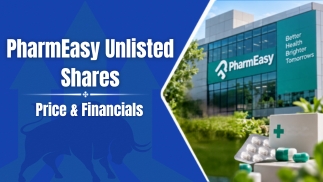
PharmEasy Unlisted Shares have become one of the most searched terms in India's pre-IPO investing community and for good reason. The company behind India's largest online pharmacy brand has been through one of the most dramatic valuation resets in Indian startup history, and it's now showing early signs of a turnaround. If you're researching PharmEasy Pre IPO Shares before buying, here's a fact-based breakdown of the numbers, the story, and what to watch before you invest.
Company Snapshot: Who Is Behind PharmEasy?
PharmEasy is owned and operated by API Holdings Limited, which most investors researching PharmEasy International Unlisted Shares should know is the actual legal entity whose shares trade in the unlisted market not "PharmEasy" as a standalone listed name. API Holdings runs a diversified healthcare portfolio built around four pillars: PharmEasy's consumer e-pharmacy and teleconsultation app, the majority-owned and BSE/NSE-listed diagnostics chain Thyrocare, and two B2B pharma distribution businesses, Ascent and Aknamed.
PharmEasy Unlisted Share Price Today
As of 22 September 2026, the PharmEasy Unlisted Share Price Today is quoted in a broad range across different unlisted share dealers reflecting the fact that, unlike listed stocks, there is no single exchange-driven price for unlisted shares. Quotes across platforms currently range roughly between ₹5.60 and ₹7.95 per share, with some intermediaries citing prices closer to ₹8.5 and others quoting a ₹5–6 range with a lot size of 100 shares.
This spread is normal in the unlisted shares dealer market: since there is no exchange-based trading, prices vary slightly across registered intermediaries and brokers dealing in the stock, based on deal size, demand, and available inventory. If you're tracking the PharmEasy Latest Share Price for an actual transaction, always confirm live pricing directly with your broker before transferring funds, since indicative online prices can shift daily.
The PharmEasy Valuation Crash ,What Actually Happened
Any honest look at PharmEasy Unlisted Shares has to start with the valuation story, because it explains today's low per-share price:
At its 2021 peak, API Holdings was valued at $5.6 billion, backed by marquee investors and an aggressive acquisition spree, including its purchase of listed diagnostics player Thyrocare.
The company filed its first DRHP with SEBI in November 2021, targeting a ₹6,250 crore IPO through fresh issuance of equity shares, with plans to use the proceeds for debt repayment, organic growth initiatives, and supply chain and technology investments.
That IPO never happened. In August 2022, API Holdings withdrew its DRHP citing market conditions and strategic considerations, and instead pursued a rights issue priced around ₹100 per share to raise capital internally.
What followed was a severe reset: a roughly 90% valuation cut, from the $5.6 billion peak to approximately $710 million during a 2024 recapitalisation, driven by a debt crisis that forced a steeply discounted rights issue. This combination of a much lower company valuation and a very large outstanding share count is the direct reason PharmEasy Share Price today sits in the single digits.
Professional Management Transition:
Professional manager Rahul Guha officially took over as the Managing Director and CEO of API Holdings in August 2025 amid a strategic refocus on corporate governance and sustainable profitability
Expanding Ecosystems: On the growth side, the company announced a strategic tie-up with Samsung Health in February 2026 to expand its digital healthcare footprint.
That said, momentum is building: the FY26 EBITDA turnaround, becoming entirely debt-free, and professionalizing leadership all point toward a company aggressively preparing its balance sheet for a viable future listing
Why Invest in PharmEasy Pre-IPO Shares Now?
For investors looking into top Indian unlisted companies, the pitch for PharmEasy Unlisted Shares has turned into a pure turnaround story:
Deep Valuation Discount: Shares trade at a fraction of their 2021 peak, which some platforms argue undervalues the assets relative to peers (implying an intrinsic value target closer to ₹15 per share compared to current single-digit unlisted desk prices).
First Operating Profit Margin: The FY26 positive group EBITDA is proof that aggressive cost-cutting and organizational reshaping worked.
Zero Debt Foundation: Reaching a debt-free status removes heavy interest payment burdens, leaving more room to reinvest revenue into core growth.
Scale: API Holdings remains one of India's largest integrated digital healthcare ecosystems, spanning e-pharmacies, B2B pharma supply networks, diagnostics, and telehealth. [
The flip side: this is still a high-risk, pre-profitability-at-the-core-pharmacy bet with no confirmed listing timeline, so proper position sizing and thorough platform price discovery remain essential for pre-IPO buyers.
Where to Buy PharmEasy Unlisted Shares in Delhi-NCR
Because unlisted shares trade off-market via Over-the-Counter (OTC) channels, choosing an unlisted shares dealer matters as much as picking the right asset. Many investors specifically seek out a physical unlisted share house in Noida or the wider Delhi-NCR belt. Local accessibility allows for direct verification, straightforward handling of Client Master Report (CMR) copies, and faster grievance resolution safeguards that can be difficult to secure through purely digital, anonymous desks.
When evaluating the best pre-IPO platforms and brokers in Delhi-NCR, prioritize these fundamental checkpoints:
Established Regulatory Legitimacy: Understand that unlisted share dealing is not a SEBI-licensed or exchange-regulated category. Avoid platforms making false claims of "SEBI unlisted registration." Instead, verify the firm’s Ministry of Corporate Affairs (MCA) registration, PAN authenticity, and underlying promoter track record.
Transparent, Deal-Specific Pricing: Look for intermediaries that quote final, all-inclusive prices (inclusive of depository partner fees or stamp duty charges) rather than flexible, bait-and-switch marketing rates.
Structured Demat Settlement: Legitimate transactions must route directly through your central depository via NSDL or CDSL off-market transfer. Demand T+1 or T+2 delivery-versus-payment execution protocols to guarantee shares land safely in your portfolio.
A Physical Corporate Office: For significant block transactions, proximity matters. Having a physical desk to visit offers immense reassurance when executing complex documentation, handling cancelled cheque submissions, or resolving transaction matching issues.
A Noida or Gurugram-based desk that positions itself as India's No. 1 Unlisted Share Company for regional investors typically combines this local accessibility with access to a broad basket of pre-IPO names PharmEasy, along with other actively traded unlisted stocks under one roof.
FAQs
1. What is the PharmEasy Unlisted Share Price today?
As of September 2026, quotes across various unlisted stock desks range roughly between ₹5.60 and ₹8.50 per share. This variance is completely normal for an over-the-counter (OTC) market, where spreads are dictated by broker inventory, transaction volumes, and transaction block sizes. Always verify live, executable rates before processing any wire transfer.
2. Is PharmEasy the same as API Holdings?
Yes. PharmEasy is simply the consumer-facing digital healthcare brand. The actual legal entity whose equity shares are traded in the unlisted pre-IPO market is API Holdings Limited, which serves as the parent holding company for PharmEasy, Thyrocare, Aknamed, and Ascent.
3. Has PharmEasy filed for an IPO?
API Holdings originally filed a DRHP with SEBI in November 2021 targeting a ₹6,250 crore public listing, but officially withdrew it in August 2022 due to shifting macroeconomic conditions. As of late 2026, no fresh DRHP has been filed, and a near-term public listing window remains completely speculative until formal regulatory paperwork is submitted.
4. Is PharmEasy profitable?
API Holdings recorded a major operational inflection point in FY26, reporting a positive adjusted group EBITDA of ₹99.9 crore before exceptional items (a massive swing from a negative EBITDA of ₹179.1 crore in FY25). Furthermore, by August 2026, the company completely wiped out its remaining ₹1,050 crore NCD debt facility to become 100% debt-free. However, investors should note that a significant portion of operating cash flows is anchored by its listed subsidiary, Thyrocare.
5. What is the minimum investment to buy PharmEasy unlisted shares?
Minimum thresholds are determined independently by individual OTC platforms based on their available share lots. Most dealers impose minimum ticket sizes ranging between ₹30,000 and ₹50,000 per block transaction. You must confirm the current active lot sizes directly with your chosen dealer.
6. How do I buy PharmEasy unlisted shares safely?
Since unlisted share trading is completely over-the-counter and not directly registered or licensed by SEBI, safety depends entirely on choosing an intermediary with verified corporate credentials. The safe process involves verifying live all-inclusive pricing, completing off-market KYC requirements (submitting PAN, cancelled cheque, and Client Master Report [CMR] details), transferring funds via structured corporate banking channels (RTGS/NEFT/IMPS), and tracking the direct electronic delivery of shares to your NSDL or CDSL demat account within a T+1 or T+2 timeline.
7. Why is the PharmEasy share price so low compared to its 2021 valuation?
The core valuation underwent a severe ~90% reset, falling from its $5.6 billion peak down to approximately $710 million during an internal recapitalization round. To stabilize operations, the company executed a heavily discounted massive rights issue priced at ₹5 per share. This extreme drop in overall valuation combined with a vastly expanded outstanding equity share count is why the individual share price currently trades in single digits.